Disposable had not been designed to be forever. That reality hits hard when you check out purchase lines puffed up with single-use gloves, overruning waste containers, and dangerous disposal invoices that increase like clockwork. Yet when groups are asked to allocate PPE recycling or glove cleaning, they typically battle to relocate from principle to numbers. The expenses sit in various journals, the advantages originate from several departments, and threat managers want airtight validation. If you've been entrusted with constructing an organization case for PPE gloves recycling and reuse, this roadmap will aid you convert operational fact into a defensible ROI.
I have actually applied and examined glove reuse programs in manufacturing, life sciences, food handling, and logistics. The characteristics transform by sector, yet the math and the operational mistakes repeat. You do not require a military of analysts or a six-month pilot to begin. You do need exact presumptions, solid cross-contamination prevention protocols, and the discipline to separate what is measurable as soon as possible from what requires a longer horizon.

The invest you're not seeing on a single line
Most companies undervalue their existing PPE invest due to the fact that they only count system cost. That's the tiniest item. Truth expense per usage consists of:
- Purchase cost per glove, shipping, inventory lugging expense, obtaining, storage space, and interior distribution.
Every time an employee opens a brand-new box, a chain of tiny expenses triggers. In heavy-use environments, that can add up to tens or numerous thousands per year, also prior to disposal. Hazardous or controlled waste enhances this. If you pay by weight or volume, every carton of used handwear covers is a repeating invoice.
When we took a look at a mid-size pharma packaging site utilizing 12 million nitrile handwear covers annually, the system cost balanced 8 to 12 cents, varying with market volatility. All-in costs, consisting of waste handling and interior labor, pressed the effective expense closer to 15 to 18 cents per set of handwear covers utilized. As soon as we quantified that, the polarity of the ROI discussion transformed. Replace also a 3rd of those usages with cleaned up gloves, and the delta ends up being meaningful.
The safety first concern: can you clean up and recycle PPE gloves?
Not every glove ought to be recycled. The central choice rests on threat, contamination kind, and the efficiency needs of the job. Groups that shut the door on reuse include direct exposure to bloodborne microorganisms, corrosive chemicals, or where single-use is mandated by guideline or client specifications. In those situations, take a look at recycling, not reuse.
For lots of various other applications, especially in regulated manufacturing, basic assembly, warehousing, and some laboratory assistance tasks, handwear cover cleansing is viable with the right process validation. A common program requires:
- Clear segregation of gloves by use situation and contamination profile. Documented cleaning methods that return handwear covers to a confirmed baseline for particle, microbial, or chemical residues, depending on the threat matrix. Lot-level traceability, so a cleaned set can be tracked back to its resource location and date. Performance screening that validates grip, tensile strength, and integrity fulfill the job's needs after several cycles.
Good programs set traditional reuse limits, commonly 2 to 5 cycles for nitrile handwear covers, adjusted by handwear cover quality and application. You don't chase a tenth cycle if the possibility of failing surpasses the cost savings. If cleaning criteria can not meet your safety and security threshold, pivot to PPE gloves recycling, where you avoid cross-contamination risk while still reducing waste and occasionally lowering disposal costs.
What you require in your ROI calculator
An ROI calculator for PPE need to capture both cash and threat. You can build it in a spread sheet, then validate the version with a tiny pilot. These are the inputs that matter most:
- Volume assumptions. Annual glove consumption by location, broken into risky single-use only and possible reuse categories. Unit prices. Current acquisition cost and expected irregularity, plus any type of distribution surcharges. Cleaning cost per handwear cover. Consists of collection containers, transport to cleaning, the cleaning company cost, top quality checks, and returns handling. If you use a supplier like Libra PPE Recycling, request for their detailed cost framework so you can use it by volume scenario. Reuse yield. Not every glove collected returns to service. Some will fall short examination or be diverted to recycling. Regular yields vary from 60 to 85 percent depending upon technique at the point of throw out and the stringency of evaluation criteria. Reuse cycle limit. Ordinary number of reuses per handwear cover prior to end-of-life. Set it by glove kind and area. Waste disposal prices. Per extra pound or per container, with and without PPE diversion. Include controlled waste costs and frequency of pickups. Internal labor. Time to educate, set apart, and manage the program. Counterbalance this with any kind of lowered time spent on obtaining and equipping new gloves. Capital or startup expenses. Collection terminals, signage, on-site QA devices, software program for traceability, and any kind of additional storage. Depreciate or amortize over the program timeline. Avoided disturbances. If you have actually encountered glove shortages or price spikes, evaluate the expense of stockouts and emergency acquires. Reuse buffers provide risk, which is a concrete economic benefit.
Think of the ROI calculator as a sensitivity model. Change quantity by 10 percent, or lower yield by 15 percent, and see what takes place. If your economics collapse under small anxiety, redesign the program prior to you launch.
An example standard you can adapt
Let's ground this with conventional numbers. Expect a warehouse utilizes 5 million nitrile handwear covers each year at 9 cents per handwear cover. Add 2 cents for dealing with and interior circulation, and 2 cents for disposal. Efficient cost per glove utilized rests near 13 cents.
You introduce glove cleaning in low-risk areas standing for 60 percent of usage. You estimate a 70 percent collection rate and an 80 percent reuse yield after inspection. Cleansing solution totals 4 cents per handwear cover, including transportation and QA. You permit 3 makes use of per handwear cover prior to end-of-life, and you draw away non-reusable gloves to a PPE gloves recycling stream that costs less than controlled waste.
Run the mathematics on 3 million prospect handwear covers:
- Collected gloves: 2.1 million. Return-to-service gloves after examination: 1.68 million. Effective usage cycles: 3 utilizes per glove yields 5.04 million glove utilizes, displacing a comparable number of new gloves. Cost of those 5.04 million usages: cleaning up fee throughout cycles plus handling, around 4 cents per usage if your service provider charges per cleaned up glove rather than per cycle. If charged per cycle, anticipate closer to 3 to 4.5 cents per use.
Compared to the 13-cent standard, each recycled glove usage conserves about 8 to 10 cents. If you displace 5 million uses, you're taking a look at $400,000 to $500,000 in annualized savings prior to you count disposal decreases. If reusing trims regulated waste pick-ups by 20 percent, there's one more 5 to 6 numbers depending upon your present rates.

These numbers will certainly vary by sector. Pharma and food have tighter top quality thresholds, which decreases reuse yield and raises QA prices. Electronics might reveal greater cost savings due to the fact that particle criteria can be met the right cleaning program while disposal expenses are high. The worth is in calibrating assumptions to your environment, then letting the design inform the story.
Cross-contamination prevention: the cornerstone of credibility
Executives will certainly greenlight spending plans when they trust the risk controls. The fastest means to shed that depend on is careless segregation. Construct your program around visible, auditable controls that employees can follow without friction.
Color-coded collection containers need to mirror glove types and areas. Put them where gloves are doffed, not 30 feet away. If centers are spread across multiple floors, match the transmitting plan to the fastest path and mount clear wayfinding. For cleaning-ready gloves, use secured liners with meddle tags, and log every full liner with a scannable ID linking it to location, shift, and date.
At the cleaning phase, batch by area of beginning and keep a quarantine zone for any lot that sets off a QA red flag. Your examination method ought to define deny requirements for rips, leaks, surface residues, and elasticity loss. Whatever rejected goes to the PPE recycling stream. Record the failing settings and share a monthly scorecard with area managers, so they can coach on correct removal techniques that boost yield.
Finally, reintroduction needs self-control. If you combine cleansed gloves with new inventory, you shed traceability. Produce a return shelf for cleaned handwear covers with an unique label and a whole lot code. If your EHS or quality groups run regular swabs or tensile tests, track them to details great deals. This is just how you please auditors and comfort operators.
Environmental obligation that makes it through scrutiny
Environmental duty is not a slogan, it's a stock of effects. A robust PPE recycling and reuse program should evaluate:
- Waste stayed clear of. Record pounds of gloves drawn away from garbage dump or regulated waste. Program the fad line by month and by facility. Emissions. If your provider provides a life cycle evaluation for their glove cleansing process, utilize it to estimate prevented CO2e contrasted to virgin glove production and disposal. Great LCAs will certainly mention presumptions and borders. Treat any figure as a range, not a single point. Transport compromises. Cleaning up and recycling introduce transportation legs. Route optimization and backhauls matter. Where feasible, settle containers and sync pick-ups with existing logistics to cut emissions. Circular economy version fit. Not every glove can be reused, but virtually every handwear cover can have a second path, whether as feedstock for molded items or energy healing in territories where that is the only feasible option. Show that your hierarchy is reuse first, recycling 2nd, disposal last.
Be straightforward concerning edge situations. If handwear covers touch cytotoxic representatives, they stay out of the reuse stream. In some biopharma procedures, even recycling is limited. Develop your environmental story on the extent you can protect and broaden as new validations allow.
How to budget without overcommitting
Budgets fail when they presume best conformity on day one. Beginning lean, after that scale.
Phase one focuses on a couple of divisions with solid guidance and secure tasks. Establish the collection goal at 60 to 70 percent, not 95. Choose a supplier willing to share very early analytics on return and failing settings. Track quality occurrences and couple them with clear restorative actions. This information gives your money lead the confidence to open the next tranche.
Phase 2 expands the aperture to adjacent locations and introduces automation where it repays. If drivers are doffing gloves at workstations, add little, lidded containers mounted under benches. If that adds 3 percent to collection price and minimizes declines by curbing flooring contamination, you tape actual gains. Think about including barcode scanning at the dock to automate whole lot capture and lower hand-operated logs.
Phase 3 lines up procurement strategy. Bargain handwear cover agreements with flexibility, so you can reduce quantities scot-free as reuse ramps. If you rely upon a solitary handwear cover brand name, examination 2 suitable choices to hedge supply danger. Tie your rates to index-based formulas if volatility returns, and make sure your lawful team recognizes that reuse is currently component of your specification, not an add-on.
Choosing a companion and setting the rules of engagement
The right partner is as much about procedure maturation as rate. Seek:
- Documented cleaning methods straightened to your contamination profiles and validated test techniques for sanitation and performance. Transparent coverage that covers collection volumes, return, denies by factor, and final personality, including reusing outputs. Traceability systems that integrate with your great deal coding or at the very least export information you can reconcile. Practical support for cross-contamination avoidance, from signage layouts to training materials. Flexibility on pilot size and the ability to right-size pickups to your volume.
Providers like Libra PPE Recycling concentrate on PPE gloves recycling and reuse programs. Vet any kind of partner by requesting for references in your sector and requesting a small-scale validation. Stroll their facility if possible. Look for a clean flow from receipt to cleaning to QA to packaging. If the procedure looks improvised, the outcomes will certainly be too.
Building driver trust
Programs fail when they feel imposed. Every employee has muscle memory built around donning and doffing PPE. Inquire to include steps and expect resistance. Engage them early with sensible benefits.
Start with the fundamentals. Train on appropriate handwear cover elimination that prevents tearing at the cuff, because that directly affects reuse return. Explain why particular handwear covers have to constantly be binned as single-use. Message metrics that show their location's payment to squander reduction and expense savings, and link wins to something substantial, like upgraded breakroom devices or financing for ergonomic tools.
Concerns concerning health and safety and security are legit. Make the inspection process visible. Motivate drivers to reject any glove that looks suspect, no charge. Gradually, as cleansed handwear covers continually feel and carry out like new, hesitation eases.
What the finance group will ask, and exactly how to answer
Expect questions regarding cost savings classification, threat, and auditability.
- Are financial savings difficult or soft? Displaced purchases and lowered waste carrying are difficult savings. Lowered stockout risk and stayed clear of emergency buys are danger evasion but can be evaluated making use of historic events. What is the repayment period? Incorporate startup costs with the internet monthly cost savings from reuse and disposal reductions. Several programs struck breakeven in 4 to 8 months at moderate scale. How sensitive is the model? Bring a variation of your ROI calculator that toggles collection rates, yields, and cleaning expenses. If the project continues to be favorable under conservative presumptions, you're in strong shape. How will we examine top quality? Supply your inspection SOP, test schedules, and traceability schema. Offer to run quarterly reviews with EHS and Quality. What are the departure conditions? Define clear limits for time out or rollback, such as a spike in problem rates, operator injury related to handwear cover failure, or a compliance nonconformance.
Finance appreciates clearness more than excellence. Program your control factors and rise paths, and your spending plan line ends up being much much easier to defend.
The nuts and screws of setting up collection
The physical configuration issues greater than you think. If bins enter the incorrect place, handwear covers won't land where they should. Area collection containers within arm's reach of doffing, not at the back of the aisle. Usage lids to prevent debris and fluids from entering. Line each container with a bag that matches your monitoring procedure, and attach a scannable tag at the moment of bag change.
Route complete bags on a routine tempo that fits change changes. Uneven pick-ups result in overfilled bins and contamination. Get a hosting area with clear flooring markings. The manager or lead ought to verify tags before transfer, not after, to avoid mystery bags with no origin data. Simplicity wins. If a step takes greater than 10 seconds, drivers will skip it under pressure.
Quality screening you actually need
It's appealing to overtest, after that sink in information. Concentrate on tests that correlate to performance in the field. For nitrile handwear covers, tensile strength and prolongation at break are strong indicators of integrity. Surface sanitation varies by job; for basic assembly, visual evaluation and random particulate matters might be sufficient. For food handling, ATP swabs on surface areas beside gloves can act as a guard measure when straight glove swabbing is unwise. Whatever you choose, apply it consistently and document the limits.
Set example dimensions based upon set size and threat category. Greater threat areas get tighter sampling plans. For a standard great deal of 1,000 cleaned up gloves, a 3 to 5 percent example with defined approval criteria can be enough for low-risk jobs. If you discover repeating failings by brand or size, adjust your procurement spec accordingly.
Cost facts that surprise most teams
Three truths arise in almost every deployment:
First, handwear cover loss happens at doffing. About half of turns down come from splits brought on by rushed elimination. A 15-minute training with a demo and a poster can lift reuse return by 8 to 12 points.
Second, labor to manage the program is lower than feared when regimens work out. The hefty lift remains in the first month. Afterwards, route and hosting take minutes per change per area.
Third, the dependability of supply ends up being a marketing factor. When markets tighten up and peers scramble, your inventory lasts longer since each handwear cover provides multiple usages. Purchase will certainly notice. So will certainly operations.
How PPE recycling matches rather than competes with reuse
Reuse is not the adversary of recycling. They enhance each other. Reuse extracts maximum value from the glove while keeping security. Reusing supplies an end-of-life pathway that minimizes waste quantities and often disposal expenses. For handwear covers that can not be safely cleaned, direct recycling still cuts your landfill impact and helps file Ecological responsibility goals.
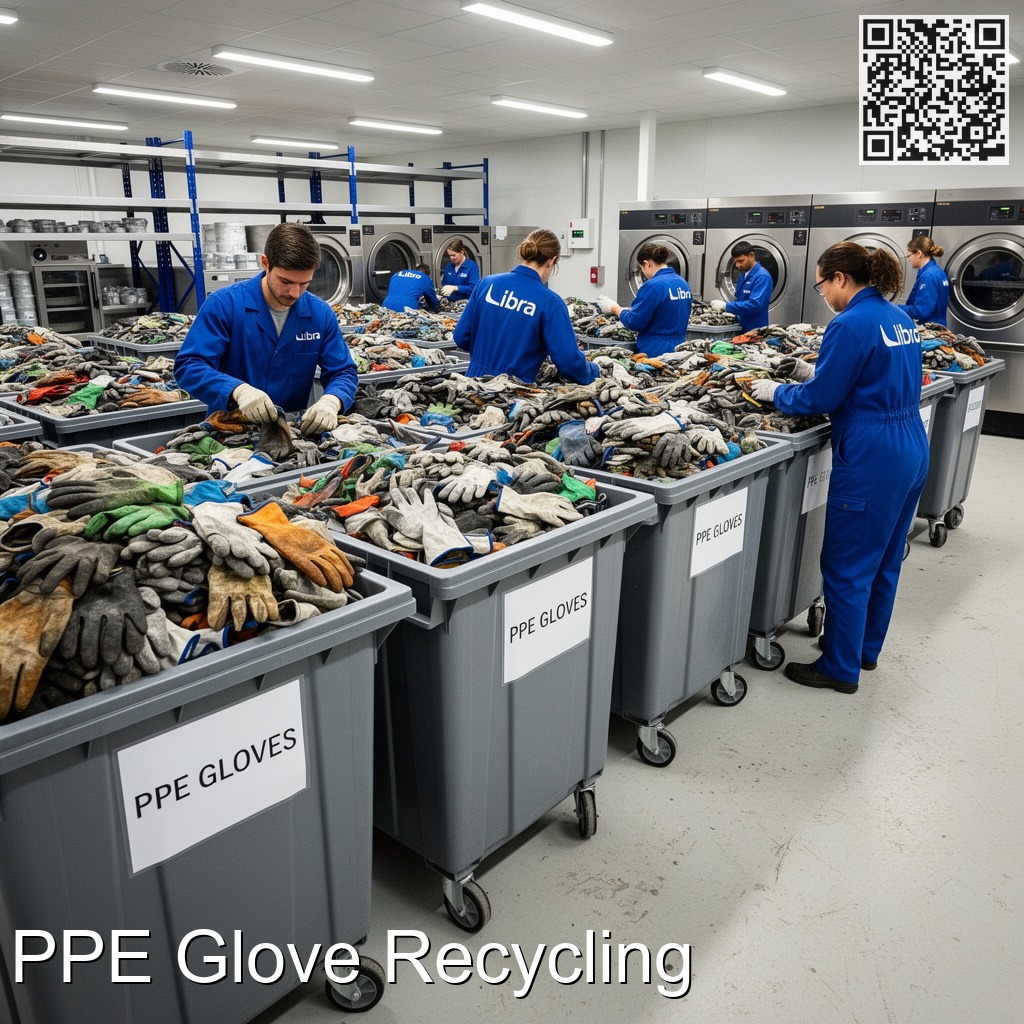
A combined program fits neatly within a round economic situation design. You purchase PPE, expand its helpful life through handwear cover cleaning where secure, and after that feed non-reusable gloves right into a reusing stream that remanufactures the product. Working with a carrier that deals with both flows simplifies logistics and reporting. Libra PPE Recycling, as an example, can set up incorporated collection, track each stream, and generate records that show diversion rates and savings side by side.
Writing the budget plan request
When it is time to request for funds, keep the request pragmatic.
Start with your baseline spend, then show the delta you can catch in the first two stages. Define start-up costs, consisting of containers, signage, training time, and any type of supplier onboarding fees. Consist of the ROI calculator summary with conservative, anticipated, and stretch circumstances. Add the governance strategy, naming the EHS lead, the quality customer, and the operations owner.
Close with a simple commitment: month-to-month coverage for 3 months, after that quarterly, with a joint evaluation by money and EHS. Offer a stop-loss stipulation if specified KPIs are missed out on for 2 consecutive months. That level of responsibility will open bucks quicker than a glossy deck.
What success resembles after 6 months
By month six, a strong program reveals a couple of distinct signals. Collection rates support in the target array. Decline reasons change from splits to minor residue, then decrease as cleansing criteria readjust. Waste pickups decrease, and the tone in driver feedback changes from suspicion to normalcy. Money sees a real reduction in order for handwear covers in the getting involved areas. Quality teams report no uptick in defects or contamination occurrences tied to gloves.
Your ROI calculator currently uses actuals, not assumptions. That is your minute to either range or improve. Sometimes the outcome is a broader rollout with small tweaks to bin positioning and training tempo. Various other times, you maintain reuse focused on particular divisions while expanding PPE gloves recycling more broadly. There is no virtue active reuse where it does not fit. The virtue lies in letting the numbers and the danger account guide you.
A last note on society and stewardship
Budgeting for PPE recycling and reuse is more than an expense workout. It informs your company what kind of stewardship you exercise. If you treat PPE as a non reusable requirement and nothing even more, that attitude will bleed right into various other resource decisions. If you buy systems that value safety, decrease waste, and manage costs with roughness, people discover. They mirror that care in exactly how they deal with materials and devices across the board.
You do not need to be ideal to begin. You do require to be disciplined. Build a calculator that captures real costs and savings. Validate your handwear cover cleansing and cross-contamination prevention protocols before you scale. Pick partners who value openness, whether that is Libra PPE Recycling or another service provider that makes your trust fund. Then, let the program show itself. The ROI exists when you style for https://rafaeldpjw279.iamarrows.com/gauging-ecological-influence-kpis-for-ppe-recycling-programs it, measure it, and maintain it honest.
Libra Industries Inc
1435 N Blackstone St, Jackson, MI 49202
+15177875675
| Place ID | ChIJt_HMH44vPYgRNbiD22DpHYo |
| CID | 9952367353767639093 |
| Business Profile ID | 6301257705288912858 |
7H9Q+2G Jackson, Michigan
| Coordinates | 42.26760060, -84.41112540 |
 Ask ChatGPT
 Ask Grok
 Ask Perplexity
 Ask Claude
 Ask Google AI
 Ask You