Public dedications about sustainability are very easy to make when the weather condition is mild and the budget cycle is months away. Ecological responsibility obtains evaluated on loud production floorings, in busy clinics, and at building sites where the rate is rapid and the risks are high. Individual protective equipment sits right in that stress. PPE keeps individuals secure, yet it additionally creates substantial waste, especially non reusable PPE gloves, masks, and dress. Relocating from plan statements to convenient technique suggests stabilizing security, conformity, price, and society while constructing brand-new practices that do not fall apart during the next rise or shutdown.
I have actually spent the last decade aiding procedures leaders and security managers develop PPE programs that strike their EHS targets without weakening daily throughput. The wins are never one huge jump. They are a series of small, sensible changes, backed by data and formed around exactly how people actually work. This post breaks down where those shifts start, just how to gauge progress, and which choices have actually proven durable across industries.
Why PPE waste is a persistent problem
Disposable equipment fixed a real issue by lowering handwear cover cleaning complexity and cross-contamination threats. It additionally created a mountain of single-use plastic. Nitrile handwear covers alone can account for numerous extra pounds of waste per employee monthly in high-use environments such as laboratories, food handling, and semiconductor lines. The products are usually contaminated, which makes standard reusing challenging. Garbage dump and incineration continue to be the default in the majority of facilities, not since teams don't care, but due to the fact that containers, hauler agreements, and standard operating procedures all prefer the course of the very least resistance.
Compliance rules include friction. When an SOP claims to deal with everything that touched biological or chemical representatives as controlled waste, team will not stop to separate gloves by type. And if supply contracts cost disposables strongly, it's difficult to justify a choice without revealing tough numbers on sturdiness and lifecycle cost.
The path ahead starts with truthful segmentation. Not all PPE brings the exact same contamination account. Not all handwear cover jobs need the exact same level of protection or dexterity. Not all facilities have the same closeness to recycler networks. Ecological obligation becomes convenient when it is scoped, not declared.
Segmenting PPE utilize in the real world
Segmentation is more than classifying bins. It entails mapping task groups, contamination levels, and waste streams, then designing flows people can adhere to under stress. In a mid-sized diagnostics laboratory I collaborated with, we divided glove usage into 3 zones based on contamination possibility: clean handling, potential splash, and high-exposure. Just the third entered into red-bag waste. The very first 2 were directed through common solid waste or designated glove reusing containers, relying on glove kind and regional options. That change reduced controlled medical waste by 18 percent in six months and really did not increase cases, due to the fact that the demarcation matched the actual laboratory workflow.
Manufacturing sites often succeed with a parallel design tied to stations. In electronic devices assembly, gloves used for ESD-sensitive work are often clean enough to keep separate. Food facilities can encounter stricter standards, yet also there, pre-production jobs like obtaining and completely dry storage space managing produce a handwear cover stream that is less risky than raw protein preparation. Obtaining that stream right into a PPE gloves recycling program requires clear aesthetic signs and constant manager check-ins during the initial few weeks.
What issues is not getting to ideal accuracy. It is developing a defensible, auditable logic that staff can enact without additional actions. If the system functions just when the flooring is peaceful, it will collapse by Friday afternoon.
Right-sizing glove specifications
Glove choice has a tendency to wander upward in thickness and functions in time. Nobody wishes to be the one that specified a glove that fell short, so we wind up with 6 mil throughout the board when 3 or 4 mil would certainly help half the jobs. That creep has price and waste effects. Thinner handwear covers, properly picked, commonly reduce waste volume by 20 to 30 percent without altering protection for low-risk tasks. You really feel the difference in a 40-worker line where each employee makes use of 10 to 15 pairs per shift. Multiply that by 250 shifts, and the weight adds up.
A cross-functional testimonial with EHS, purchase, and line managers normally uncovers a couple of handwear cover SKUs that can be downsized. Pilot the modification on one line for two weeks, track breakage and job conclusion speed, and afterwards roll up. The trick is to keep an eye on cross-contamination avoidance as you transfer to thinner gloves. If personnel double-glove to compensate, you have not lowered waste; you have simply moved it.
When glove cleansing makes sense, and when it does not
Reusable gloves, especially in hefty industry, can be cleaned up and redeployed. Think about cut-resistant or chemical-resistant handwear covers with defined laundering specifications. The cost mathematics commonly prefers reuse when a handwear cover survives at least 5 to 10 cycles without shedding protective homes. A metals plant I supported relocated 40 percent of tasks from non reusable nitrile to a reusable coated knit. Washing expenses ran about 0.18 to 0.25 dollars per set per cycle. The handwear covers balanced nine cycles before retired life. Even with loss rates around 8 percent monthly, the program saved roughly 28 percent versus disposables and minimized solid waste by almost half for that unit.
But laundering is not a cure-all. In food production or bio labs, handwear cover cleansing rarely passes danger and conformity evaluations. Dampness, protein deposit, and microbiological loads make reuse a nonstarter in numerous applications. Reuse also battles in jobs where tactile sensitivity issues. Reusable gloves usually have thicker coatings and different fit profiles, which slow down delicate setting up work.
The trick is to take the component of your operation where glove cleaning meets the safety and security requirement and to leave high-contamination zones with disposables, while searching for recycling options downstream.
How PPE gloves recycling really works
Most glove recycling programs rely upon material-specific sorting and quantity thresholds. Nitrile is one of the most usual feedstock, with PVC and latex much less constant. The recycler sets standards: only uncontaminated or lightly contaminated gloves, no biohazard, no visible heavy oils or solvents. In method that indicates gloves from tidy setting up, packaging, or assessment are eligible, while anything utilized in wet chem or clinical testing is not.
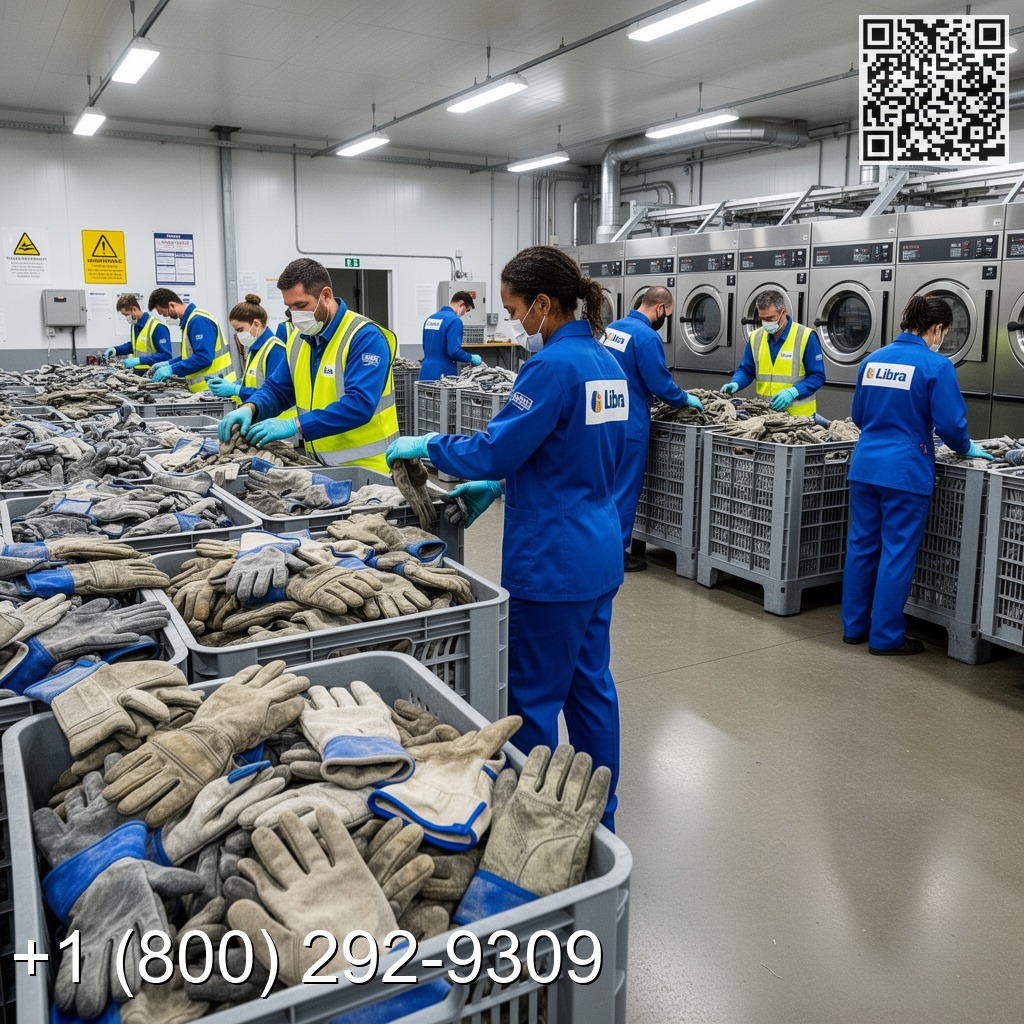
You settle handwear covers in lined containers, then ship complete gaylords to a facility that refines the material into pellets or crumb for additional products like mats, totes, or composite products. Rate signals vary. Some programs are fee-based, others balance out part of the freight or pay a small rebate when quantities are high. Regional access issues. If you're delivering throughout 2 states for each and every pick-up, the carbon mathematics gets rough, and personnel motivation winds down as containers rest half full.
Programs like Libra PPE Recycling highlight the round economic climate model with useful guardrails. They commonly define glove types, give containers and signage, and aid generate effect records for sustainability groups. They do not turn hazardous waste into candy. Their value remains in carving out the secure, recoverable part of PPE waste and transforming it right into a repeatable circulation with traceability. The business case improves when you concentrate eligible handwear covers in a couple of large places instead of spreading tiny pilots across several sites.
Building a circular economic situation design that survives audits
Circularity is an engaging concept. In facilities function it ends up being trustworthy when 2 problems are met: your incoming requirements are disciplined, and your outgoing streams are reliable. If your purchase team can dedicate to a slim collection of handwear cover SKUs that are recognized to be recyclable, and your procedures can dependably separate qualified waste, you begin to close the loop.
There is an audit measurement here. Regulatory authorities and inner auditors appreciate misclassification. The safest way to scale is to produce intense lines in between dangerous and non-hazardous PPE, with training that leans conventional. I such as to establish a decision tree that fits on one web page: job kind, noticeable contamination, and location establish the bin. Supervisors carry pocket cards for the first month. You measure very early error prices with bag checks, not to capture people out, however to tune the signs and bin placement.
A circular economic situation model likewise depends upon supplier longevity. Vet recyclers for end-market security. Ask where the pellets go, ask for make-up reports, and pressure examination their capability claims. Couple of things demoralize frontline groups quicker than a program that stops briefly for 3 months while a recycler pursues new outlets.
The price situation, with an ROI calculator as a sanity check
Leadership requires a number they can safeguard. An ROI calculator for PPE sustainability programs should draw from a couple of containers: prevented acquisition expense, prevented controlled waste charges, incremental prices like containers and freight, and labor time for arranging. It should likewise estimate abstract advantages, yet maintain those different from the base case.
An excellent beginning calculation appears like this. Establish your baseline glove invest and squander quantities over a depictive duration, state 3 months. Measure existing regulated waste tonnage and per-pound costs, along with strong waste and reusing prices. Price quote the portion of glove use eligible for reusing or alternative with recyclable alternatives. Consider loss prices for reusables and conformity pillows for reusing contamination limits. Then model 3 circumstances: conventional, expected, and optimistic, with participation prices varying by 10 to 20 percent points.
When we built a calculator for a 300-employee packaging facility, the anticipated scenario revealed a 12 to 16 percent decrease in all-in glove invest within the initial year, with a 6 to 9 month payback. The traditional scenario, assuming lower participation and greater freight, still reached break-even by month 12. The factor is not to create a solitary magic number. It is to comprehend sensitivity to variables like worker participation and hauling distance, then intend a rollout that manages those sensitivities.
Cross-contamination prevention must stay non-negotiable
Safety gains vanish if contamination spreads. Sorting programs include threat if they ask team to manage unclean PPE greater than when. Container placement, lid layout, and signs keep that threat down. Hands-free lids near leaves function better than a solitary station at the end of the aisle. Full containers ought to be nabbed and sealed without hand-operated compaction. Supervisors require to model the actions, not just point to posters.
Where medical or biohazard job occurs alongside clean tasks, physical splitting up of containers matters. Do not put glove reusing containers near sharps or red-bag terminals. Stay clear of unclear colors. If red shows biohazard in your facility, do not utilize any kind of red for non-hazard containers. These are little signs that stop muscle memory from undermining your program.
Data, not slogans
If your sustainability metrics live in a slide deck, they will certainly be lightweight. Track weights, contamination being rejected rates from the recycler, and glove SKU intake month over month. A basic control panel that reveals eligible handwear cover healing price and controlled waste decrease by location encourages groups greater than a company press release. Share the misses. When a set obtains declined for contamination, reveal the number and the reason. Individuals who see the comments loophole improve separation faster.
One plant manager kept a range near the outgoing dock and made a weekly routine out of considering the handwear cover reusing totes. He posted the weight, plus the stayed clear of disposal cost making use of a standard price, on a white boards. Nothing fancy, just a number in black marker. Involvement climbed, and more notably, stayed up with a busy period when extra actions usually crater.
https://www.librami.com/shop-deals.htmlWhat Libra PPE Recycling and comparable programs can and can not do
Libra PPE Recycling has actually gotten traction by keeping its extent clear. They concentrate on products they can process right into secure downstream items, with paperwork ideal for ESG coverage. The program usually consists of standard containers, training materials, and periodic effect summaries that quantify recovered weight and approximated carbon benefits. That documentation assists sustainability groups convert functional efforts right into business coverage without creating numbers.
What they can refrain from doing is make regulated waste risk-free or lucrative. They will draw lines you might find troublesome, such as forbiding handwear covers made use of in specific solvents or biological agents. Take those lines seriously. A recycler that says yes to every little thing is a threat. Utilize the program to focus your cleanest glove streams, then set it with purchase changes and recyclable alternatives elsewhere.
Procurement's peaceful power
Procurement shapes sustainability greater than many teams understand. A streamlined SKU established, selected with recyclability in mind, decreases errors and enhances recycling yields. Product packaging additionally matters. Bulk-packed gloves in recyclable containers with very little inks lower inbound waste and can decrease per-unit products emissions by increasing pallet density. If your providers use take-back for cartons or pallets, bake that right into the contract and procedure it.
Price stress still counts, but the lower-cost glove that pollutes a reusing stream or pressures double-gloving is not less expensive. Include performance standards and decline rates in your complete expense view. Some distributors now publish handwear cover life quotes by task course. Those numbers are imperfect, but they aid you established expectations and select pilots with far better odds.
Training that sticks
Frontline training ought to be short, frequent, and tied to the workplace. A 20-minute kickoff talk seldom sticks. Two-minute huddles near the bins, with clear instances of what goes where, do far better. At an early stage, supervisors can present a couple of borderline products and ask workers to place them. The conversation that follows brings quality quicker than handouts.
Refreshers issue. Turn over and shift changes erode uniformity. Include an easy punctual to regular monthly security talks and appoint a turning "container captain" for each area for the first quarter. Praise assists more than policing. A fast shout-out during the early morning meeting when a team hits a splitting up goal goes a long way.
The cultural hurdle: satisfaction, not guilt
Guilt does not build long lasting programs. Pride does. When teams see their effort featured in a company upgrade, with their picture alongside the numbers they achieved, the program becomes part of identification. A maintenance technology at a food plant told me he cared about handwear cover recycling due to the fact that his child had actually examined sea plastics in college, and he wanted to bring her to the plant and reveal her what they were doing. That type of link defeats a lots policy memos.
Leaders can cultivate this by providing teams latitude to solve tiny issues. If covers on containers stick, allow the team source a better joint. If the signs puzzles, allow them redesign it. Possession transforms an exterior need into something people defend even when nobody is watching.
Anticipating the side cases
Edge instances sink programs when overlooked. Analyze these common ones and set a stance upfront.
- Surges in production: Throughout top durations, engagement drops unless you add containers and pick-up regularity. Pre-stage additional containers and designate back-ups for bag changes. New item introductions: Handwear cover requirements commonly alter. Build a fast evaluation step into the NPI checklist to validate the best glove SKUs and upgrade the bin guidelines if needed. Multi-tenant sites: If you share anchors or waste lawns, label containers by occupant and track pickups to stay clear of cross-billing disputes. Remote centers or field websites: Tiny quantities make reusing harder. Take into consideration aggregation at a local hub or concentrate on right-sizing handwear cover specs rather than recycling. Contract transitions: When changing recyclers or launderers, overlap solutions for a month to stay clear of gaps that erode habits.
Handle these proactively and your baseline will hold when situations shift.
Measuring what issues over a full year
Three months of success is a pilot. A year tells you if the program incorporates into operations. Goal to track at least these indications quarterly: glove SKU mix and consumption per 1,000 labor hours, percentage of handwear covers eligible for recycling caught in the program, controlled waste mass and cost per unit output, turned down reusing lots and reasons, and injury or contamination case rates related to handwear cover usage. If injury rates climb after a SKU change, be ready to revert and reassess. If reusing capture plateaus, take another look at bin placement and training, not just participation messaging.
The very first year generally produces an S-curve. Fast very early gains from low-hanging fruit, a plateau as you work through habits and side situations, then a slower rise as you tune purchase and station designs. Management patience helps. Celebrate the first 10 percent decrease in managed waste, after that maintain pushing for the following 5 with tiny, specific changes.
A useful roadmap from plan to practice
Ambitions get traction when equated right into steps that fit your site's rhythm. A straightforward, field-tested sequence appears like this:
- Map jobs and contamination levels, after that specify eligible streams for PPE gloves recycling and any type of recyclable handwear cover options. Maintain the guidelines easy sufficient for a crowded shift. Pilot in one or two areas with trustworthy managers. Track weights, prices, denial rates, and occurrence information weekly for the first month. Adjust glove specifications where risk-free, intending to minimize thickness and SKU count for low-risk jobs. Expect compensating behaviors like double-gloving. Expand to adjacent areas, include containers, and timetable pick-ups to avoid overflow. Integrate fast huddle-based training and designate rotating container captains. Build your ROI calculator with standard and pilot information, after that quick leadership on expected, traditional, and hopeful situations. Use it to secure budget and scale.
This is not glamorous work. It is the sort of stable, repetitive enhancement that makes an ESG slide deck honest. Over time, it additionally makes teams proud of the way they run their shop.
Where this leaves us
Environmental duty in PPE is not an all-or-nothing selection between disposables and risk. It is a technique. Right-size glove specs so individuals can function securely without extra. Use glove cleansing where it endures compliance analysis and supplies quantifiable financial savings. Feed qualified streams into a reputable recycling program such as Libra PPE Recycling, with clear guardrails and transparent results. Guard cross-contamination prevention from faster ways. Measure the effort with an ROI calculator that values the unpleasant variables of real procedures. And keep the culture secured in satisfaction instead of guilt.
The result is a PPE program that shields individuals and the locations they live. Not because a policy states so, however because the method works on an active Tuesday afternoon when a line lags and a supervisor requires a system that holds under pressure. That is the criterion. And it is accessible when you design for the method work actually happens.
Libra Industries Inc
1435 N Blackstone St, Jackson, MI 49202
+15177875675
| Place ID | ChIJt_HMH44vPYgRNbiD22DpHYo |
| CID | 9952367353767639093 |
| Business Profile ID | 6301257705288912858 |
7H9Q+2G Jackson, Michigan
| Coordinates | 42.26760060, -84.41112540 |
 Ask ChatGPT
 Ask Grok
 Ask Perplexity
 Ask Claude
 Ask Google AI
 Ask You